







Sleek Dark Royal Elegance: Why Simple Fashion Can Leave the Strongest Impression
The Look That Made Me Appreciate Simplicity Again
Sometimes the outfits that stay in my mind longest are not the ones covered in sequins or dramatic embroidery. They are the quiet ones—the dresses with clean lines, beautiful proportions, and just enough confidence to stand on their own.
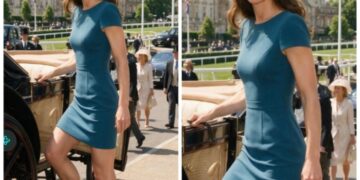
That is exactly what I felt looking at the uploaded image.
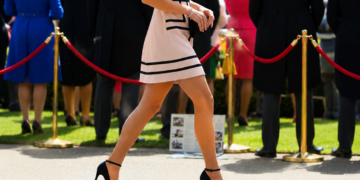
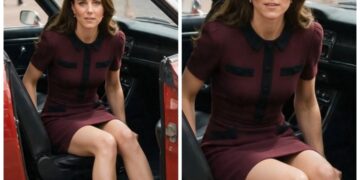
I cannot verify the identity of the woman shown, so I prefer to enjoy the photograph simply as Princess Catherine-inspired fashion rather than presenting it as a genuine royal appearance. What interests me is the styling: a dark fitted dress, short sleeves, an uncomplicated silhouette, and very little decoration.
To me, this is one of the most useful lessons in luxury fashion. Looking luxurious is not always about spending more or adding more. Sometimes the strongest impression comes from removing unnecessary details.
As I get older, I find myself increasingly attracted to clothing like this. I want pieces that look polished without demanding too much effort—and that still feel elegant five years from now.
Why Dark Colors Have Always Worked So Well in Royal Style
Princess Catherine’s genuine wardrobe has long included navy, deep blue, black, burgundy, and other darker shades.
Navy in particular has become something of a dependable royal color because it has much of the sophistication of black while feeling slightly softer for daytime engagements.
In April 2026, Catherine wore a custom navy Givenchy coat dress for ANZAC Day commemorations. Harper’s Bazaar described the design as featuring structured shoulders, a fitted silhouette, and contrasting white lapels—a good example of how traditional dark tailoring can still feel contemporary. (Harper’s BAZAAR)
Black appears less frequently in her public wardrobe, particularly head-to-toe. Vogue has noted that Catherine often turns to black for remembrance events, where strong tailoring and restrained accessories suit the solemn nature of the occasion. (Vogue)
I think that distinction is interesting.
Dark fashion can be serious, but it certainly does not have to be boring.
The Fashion Details I Would Borrow
Looking at the uploaded fashion inspiration, the strongest feature is the uninterrupted silhouette.
There is no large belt, bright print, oversized necklace, or dramatic contrasting trim. Because of that, the eye naturally notices the shape of the dress.
This is why simple clothes demand good proportions.
When there is very little decoration, details such as shoulder fit, waist placement, sleeve length, and hemline suddenly become more important.
I also like the simplicity around the neckline.
A clean neckline leaves room for several styling options. You could add pearls for something traditional, small gold earrings for warmth, or nothing more than a delicate pendant.
Personally, I would keep the shoes equally simple.
Black pumps would preserve the monochromatic effect. Nude or cream shoes would soften it. A burgundy handbag could introduce just enough color without changing the character of the outfit.
That is the beauty of a dark dress: it gives you choices.
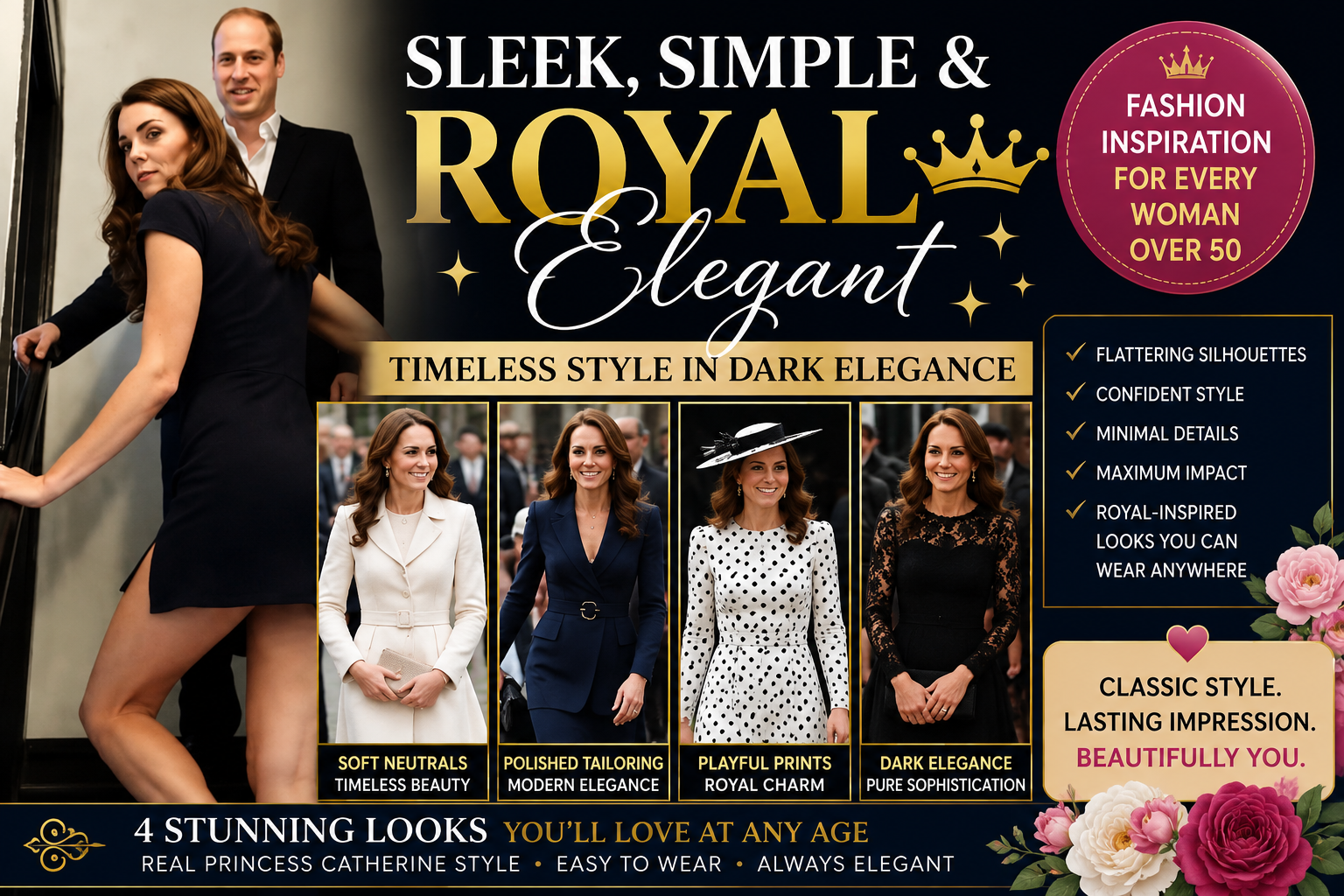
Four Real Princess Catherine Looks That Show the Power of Dark Elegance
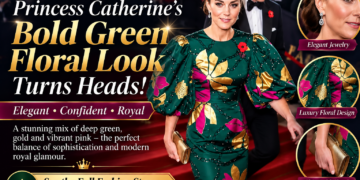
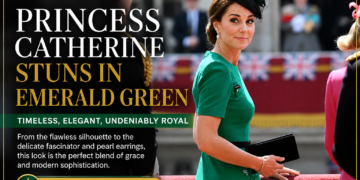
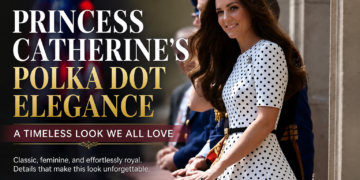
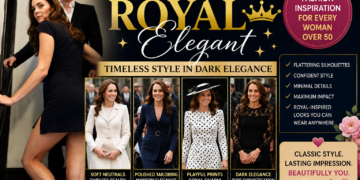
These four genuine web-sourced photographs of Princess Catherine show how dark colors can move from daytime tailoring to evening glamour. One uses classic navy, another dramatic black lace, another deep evening blue, while the Remembrance look demonstrates the strength of formal black tailoring.


I especially like seeing these photographs together because they prove that dark dressing is not really one style.
The tailored navy midi dress creates a professional daytime mood.
The Alexander McQueen black lace gown is completely different—romantic, formal, and dramatic.
The deep navy evening gown shows how beautifully a dark color works when the fabric becomes softer and more fluid.
And Catherine’s 2025 Remembrance Sunday appearance demonstrates the opposite approach: architectural tailoring, a sculptural hat, pearls, and a restrained palette appropriate to the occasion. Vogue reported that she rewore a Catherine Walker coat previously seen in 2022 while updating it with different accessories and a navy lace collar. (Vogue)
That is a styling lesson worth remembering: the same color can tell completely different stories depending on cut and texture.
Why People Respond So Strongly to Princess Catherine’s Fashion
Part of the fascination with royal fashion is that clothes are wonderfully easy to discuss.
We may never attend a state banquet or royal ceremony, but almost everyone understands the question: Would I wear that?
Princess Catherine’s wardrobe is particularly interesting because she frequently returns to established formulas.
Vogue described her 2025 style as increasingly centered around a recognizable royal uniform: Catherine Walker coat dresses, Alexander McQueen tailoring, Self-Portrait designs, and pieces that can be reworn rather than constantly replaced. (Vogue)
Her wardrobe repetition has also been widely documented. Vogue has highlighted dozens of occasions where Catherine brought back dresses, coats, jackets, and accessories from previous years. (Vogue)
I actually find that more inspiring than seeing something new every single day.
Real wardrobes repeat.
And good clothes deserve to be worn again.
What Fashion Experts Understand About Simplicity
The simplest outfit in the room is not necessarily the easiest one to create.
When you remove pattern and decoration, tailoring becomes everything.
Imagine two plain navy dresses.
One has shoulders that fit perfectly, a waist placed at exactly the right point, and fabric that hangs cleanly.
The other pulls across the hips and bunches around the waist.
They may be the same color and even the same price, yet one will immediately look more expensive.
That is why I would spend more time checking fit than worrying about labels.
Catherine’s documented wardrobe illustrates this repeatedly. Vogue has described her style as relying heavily on strong silhouettes and precise tailoring, particularly in formal coats and suits. (British Vogue)
Good tailoring creates its own decoration.
Why This Matters Even More After 50
I think women over 50 can get enormous value from this approach.
By this age, many of us have already discovered what we genuinely wear.
We know whether six-inch heels will remain in the box forever.
We know whether complicated sleeves annoy us.
We know whether a certain neckline makes us feel comfortable.
That knowledge should make shopping easier.
Instead of buying five fashionable dresses, I would rather have one beautifully fitting navy or black dress that works for dinner, a celebration, a business event, or an afternoon gathering.
The exact silhouette in the uploaded image may not suit everyone.
That is fine.
Make it knee-length.
Choose midi.
Add three-quarter sleeves.
Wear flats.
Royal-inspired fashion should give us ideas, not rules.
Why Rewearing Is One of My Favorite Fashion Lessons
One detail of Catherine’s real wardrobe that I continue to appreciate is her willingness to rewear.
For her first public appearance of 2026, for example, Vogue reported that she returned to a burgundy Roland Mouret suit previously worn in Boston in 2022 and again in 2023, styling it with tonal pieces for a fresh appearance. (Vogue)
That makes sense to me.
If a dress fits beautifully today, why should it become useless next year?
Luxury, at least in my wardrobe, increasingly means buying something worth keeping.
Why Dark Elegance Never Really Goes Away
Fashion trends change constantly.
One season tells us brown is replacing black.
The next announces burgundy.
Then suddenly navy is everywhere again.
Yet dark dresses never truly disappear.
They survive because they are adaptable.
Add pearls and the look becomes classic.
Add a strong belt and it becomes sharper.
Add colorful shoes and suddenly it feels playful.
Add a tailored coat and it becomes formal.
One dress can have several personalities.
That is precisely the kind of clothing I want more of.
The Style Lesson I Would Keep
I cannot say that the uploaded image depicts Princess Catherine, but I can say that I like the fashion idea very much.
The dark color feels sophisticated.
The clean silhouette feels modern.
The absence of heavy decoration keeps everything calm.
And genuine Princess Catherine outfits show that these same principles—strong tailoring, restrained styling, dark colors, and thoughtful repetition—can produce memorable fashion without excessive ornament.
Sometimes elegance whispers.
And perhaps that is why we notice it.
Frequently Asked Questions
Does Princess Catherine really wear navy often?
Yes. Navy and blue appear repeatedly throughout her documented wardrobe. Her April 2026 ANZAC Day appearance featured a custom deep-blue Givenchy coat dress with contrasting white lapels. (Harper’s BAZAAR)
Does Princess Catherine wear black?
Yes, although head-to-toe black is less common than colors such as blue. Black frequently appears in her Remembrance wardrobe and at formal evening occasions. (Vogue)
Is the uploaded image definitely Princess Catherine?
I cannot verify or identify the person in the uploaded photograph, so I have treated it as Princess Catherine-inspired fashion rather than presenting it as a confirmed royal appearance.
Can women over 50 wear fitted dark dresses?
Absolutely. Age does not determine the right silhouette. The important questions are whether the dress fits comfortably, suits your lifestyle, and makes you feel confident.
How can a simple dark dress look more expensive?
Prioritize fit, fabric, clean shoes, restrained accessories, and good garment care. A perfectly fitting affordable dress can look more polished than an expensive dress with poor proportions.
What Princess Catherine fashion lesson is easiest to copy?
Wear good pieces repeatedly. Catherine’s documented wardrobe includes numerous rewears, showing that timeless style does not require buying something new for every occasion. (Vogue)