






















How Much Money Could You Need to Retire Comfortably at 60?
Retiring at 60 sounds wonderful.
No alarm clock. No Monday commute. More time for family, travel, gardening, reading, or simply enjoying a slower morning with coffee.
But there is one question that can quietly follow almost everyone approaching retirement:
How much money do I actually need to retire comfortably at 60?
The answer is not one universal number.
For one household, $750,000 may be enough. Another may feel more comfortable with $1.5 million or more. Your real target depends on how much you spend, where you live, whether you still have a mortgage, your healthcare costs, pensions, government benefits, taxes, and how long your retirement may last.
The good news is that you do not need a perfect prediction.
You need a realistic framework.
And after 50, that kind of clarity can be far more valuable than chasing an impressive-looking investment balance.
Why Retiring at 60 Requires Extra Planning
Retiring at 60 is different from retiring several years later because your savings may need to support you for a longer period.
Someone who retires at 60 could potentially spend 25, 30, or even more years in retirement.
That means your portfolio may need to cover:
- everyday living expenses,
- healthcare,
- home repairs,
- travel,
- vehicle replacement,
- inflation,
- taxes,
- and unexpected family expenses.
You may also have several years before certain pension or government retirement benefits begin.
That gap is extremely important.
If you stop working at 60 but do not begin another income source until later, your savings may need to carry a larger portion of your lifestyle during the early retirement years.
Start With Your Annual Spending
Instead of asking, “How much should a 60-year-old have saved?” start with a better question:
How much will my retirement lifestyle cost each year?
Suppose you expect the following monthly expenses:
Housing: $1,500
Food: $700
Utilities: $350
Transportation: $450
Insurance: $500
Healthcare: $700
Entertainment and hobbies: $400
Travel fund: $500
Other expenses: $400
That totals approximately $5,500 per month.
Over one year, that is about $66,000.
Now you have a useful starting point.
Your retirement portfolio does not necessarily need to provide all $66,000.
You may eventually receive pension income, Social Security or another government benefit, rental income, or other regular payments.
Example: A $66,000 Retirement Lifestyle
Imagine you want approximately $66,000 per year after retiring.
Suppose pensions and other dependable income eventually provide $30,000 annually.
That leaves around $36,000 per year that may need to come from investments.
Using a simple planning illustration, if you wanted that $36,000 to represent roughly 4% of your portfolio, you might estimate:
$36,000 ÷ 0.04 = $900,000
That does not mean $900,000 is guaranteed to be enough.
The so-called 4% approach is simply one starting point often used to think about retirement withdrawals. Your appropriate withdrawal rate could be higher or lower depending on investment mix, retirement length, market conditions, taxes, flexibility, and other income.
But suddenly the question becomes much clearer.
Instead of guessing whether you need $500,000, $1 million, or $2 million, you are connecting your savings target to the income your lifestyle actually requires.
What Could $750,000 Provide?
Suppose you retire with $750,000.
At an illustrative 4% initial withdrawal, that would equal approximately:
$30,000 per year
or about:
$2,500 per month before taxes.
If you also receive $30,000 annually from pensions or government benefits, your combined gross income might eventually be around $60,000 per year.
For someone with a paid-off home and modest expenses, that may be comfortable.
For someone with a large mortgage, expensive travel plans, or high healthcare costs, it may feel tight.
This is why the retirement account balance alone never tells the whole story.
What Could $1 Million Provide?
A $1 million portfolio sounds like an important milestone, and for good reason.
Using the same simple 4% illustration:
$1,000,000 × 4% = $40,000 per year
That is approximately $3,333 per month before taxes.
If other retirement income later adds $30,000 annually, total gross income might be approximately $70,000.
For many households, that could support a comfortable retirement.
But again, location and lifestyle matter enormously.
Someone paying $3,000 per month in housing costs faces a very different retirement from someone whose mortgage has already been eliminated.
What About $1.5 Million?
At $1.5 million, the same illustration would produce:
$60,000 per year
before taxes.
Add another $30,000 of pension or government income, and total annual gross income could eventually reach around $90,000.
That may support considerably more discretionary spending such as travel, dining, hobbies, gifts, or home improvements.
Yet even $1.5 million can disappear surprisingly quickly if expenses are poorly controlled.
The lesson is simple:
Retirement comfort depends on both assets and spending.
Healthcare Can Change the Number
Healthcare deserves special attention for someone retiring at 60.
You may be leaving employer-provided coverage before becoming eligible for other programs available later.
Depending on your country and circumstances, private insurance or bridging coverage can become a major expense.
And insurance is only part of the picture.
You may still encounter:
- deductibles,
- prescription costs,
- dental work,
- vision care,
- specialist visits,
- hearing care,
- long-term care,
- and home modifications.
If healthcare costs an additional $1,000 per month, that represents another $12,000 per year.
Using our simple 4% illustration, funding an extra $12,000 annually from investments could require roughly another $300,000 of portfolio assets.
That shows how dramatically individual circumstances can change a retirement target.
Housing May Be Your Biggest Retirement Lever
Imagine two people each retire with $1 million.
One has a paid-off home.
The other has a $2,000 monthly mortgage.
The second retiree needs another $24,000 every year just to cover mortgage payments.
Using the same simplified framework, supporting $24,000 of additional annual withdrawals could correspond to roughly $600,000 more in portfolio assets.
That does not mean everyone should automatically pay off a mortgage before retiring.
Interest rates, taxes, liquidity, investment returns, and personal preferences all matter.
But it demonstrates why lowering fixed expenses can dramatically reduce the amount of money you need to feel comfortable.
Do Not Forget Inflation
A retirement beginning at 60 may last several decades.
During that time, prices are unlikely to stay the same.
Suppose you need $60,000 annually today.
Even modest inflation can make the same lifestyle considerably more expensive 15 or 20 years later.
That is one reason many retirees continue to hold some growth-oriented investments rather than moving everything into cash.
Cash provides stability.
Growth investments may help maintain purchasing power.
Finding the right balance is one of the central challenges of retirement planning.
Build Three Retirement Numbers
Instead of choosing only one target, create three.
Your Minimum Number
This is the amount needed to cover essentials:
housing, food, healthcare, utilities, transportation, and insurance.
Your Comfortable Number
Add restaurants, hobbies, gifts, entertainment, and regular travel.
Your Ideal Number
Add larger vacations, premium experiences, home upgrades, generous gifts, or other luxuries.
This gives you flexibility.
Perhaps your minimum lifestyle requires $45,000 annually.
Your comfortable lifestyle requires $65,000.
Your ideal lifestyle costs $85,000.
Suddenly you know what different retirement savings levels could realistically provide.
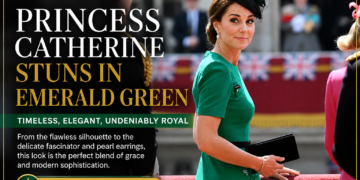
The 10% Royal-Inspired Lesson From the Blue Fashion Photo
There is one small lifestyle lesson we can borrow from the royal-inspired blue fashion image.
The outfit looks memorable because it is focused.
One strong color.
Clean lines.
Classic styling.
Very little clutter.
Financially comfortable retirement can follow the same principle.
You may not need the largest house.
You may not need a new luxury vehicle every few years.
You may not need an overflowing wardrobe.
Sometimes one carefully chosen purchase provides more satisfaction than ten impulsive ones.
Royal-inspired elegance often appears effortless because the overall look feels deliberate.
Smart retirement spending can create the same effect in life.
The goal is not to spend nothing.
The goal is to spend intentionally.
A Simple Retirement Estimate
Here is a quick way to begin estimating your retirement target.
First, estimate your desired annual retirement spending.
Suppose it is $70,000.
Subtract reliable annual income.
Suppose pensions and benefits provide $30,000.
You still need:
$40,000 per year
from your investments.
Using a 4% planning illustration:
$40,000 ÷ 0.04 = $1,000,000
Now add cash reserves for emergencies, major purchases, or the years before other income begins.
Your personal target might therefore be above $1 million.
Someone with lower spending could require far less.
Someone with expensive housing or healthcare could require considerably more.
That is why retirement planning should always begin with your own life rather than someone else’s savings balance.
Final Thoughts
So, how much money could you need to retire comfortably at 60?
For some people, perhaps $700,000 or $800,000 combined with reliable retirement income may be enough.
Others may feel more secure around $1 million.
Households with higher spending, expensive housing, significant travel plans, or limited pension income may need $1.5 million or considerably more.
The most useful number is not the balance that sounds impressive.
It is the balance that can realistically support your expenses.
Know what your lifestyle costs.
Estimate your dependable retirement income.
Plan carefully for healthcare.
Control fixed expenses.
Keep an emergency reserve.
And leave room for inflation and unexpected events.
After 50, financial freedom increasingly becomes less about accumulating more possessions and more about creating choices.
And perhaps that is the real definition of retiring comfortably at 60: having enough money that your days can finally belong to you.
FAQ
Is $1 million enough to retire at 60?
It can be for some households, particularly when combined with pension or government retirement income and modest expenses. For others, especially those with high housing or healthcare costs, $1 million may not provide the lifestyle they want.
Can I retire at 60 with $750,000?
Potentially. Using a simple 4% illustration, $750,000 could initially provide around $30,000 per year before taxes. Other income sources and your spending level would determine whether that is sufficient.
How much monthly income could I need in retirement?
That depends on your lifestyle. Build a realistic monthly budget based on housing, healthcare, food, transportation, insurance, travel, hobbies, and irregular expenses rather than relying on a generic percentage of your working income.
Should I pay off my mortgage before retiring at 60?
Not automatically. Paying it off can reduce monthly expenses, but the best decision depends on your mortgage rate, available cash, taxes, investment strategy, and overall financial plan.
What is the biggest risk of retiring at 60?
A longer retirement means your money may need to last for several decades. Inflation, healthcare costs, early market declines, and overspending can all put pressure on a portfolio.
What should I do five years before retirement?
Track your real spending, estimate future retirement income, reduce expensive debt, increase savings where possible, review healthcare options, and test living on your expected retirement budget before you actually stop working.